


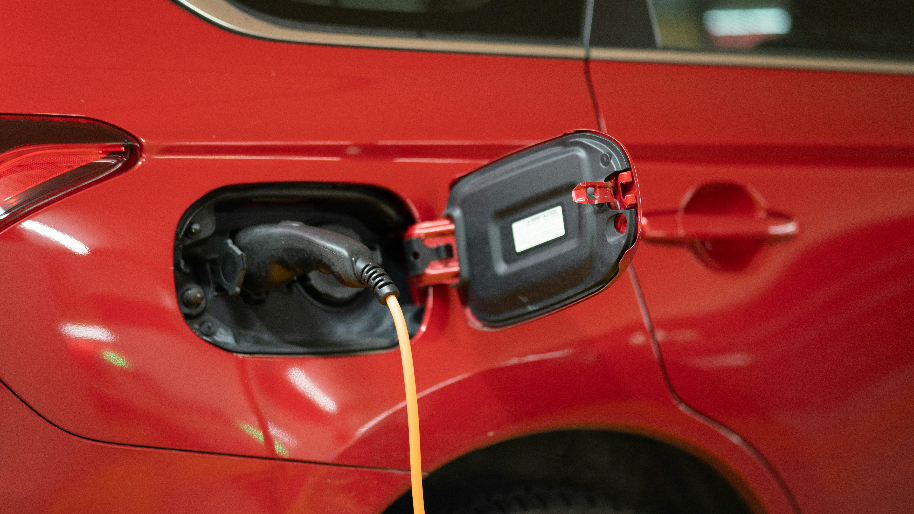
Last Thursday, speaking at the Republican National Convention, Donald Trump hinted that he would support Chinese automakers moving production facilities from Mexico to the U.S. to create new jobs in the domestic auto industry. To discourage foreign vehicle imports, Trump promised to impose new tariffs on Mexican auto imports as well. In addition to opening the U.S. market to Chinese EVs by allowing their manufacturing plants to be set up in the country, Trump is also looking at reversing some of the policies introduced by President Joe Biden to support the EV industry in the last couple of years. According to experts, Trump may look to reverse some EPA regulations that are aimed at supporting the EV industry through 2030 to ensure at least 50% of new passenger vehicle sales will be electric by then. If Trump gets a second term and decides to slash the tax credits of up to $7,500 offered for EV buyers, EV stocks such as Tesla, Inc. (TSLA) are likely to take a big hit in the coming months.
Signs Of Trouble
The domestic EV sector has been under pressure for a few months due to several reasons. Global supply chain disruptions that led to a shortage of critical components required to produce EVs, raw material shortages, the high production cost of EVs compared to combustion engine vehicles, the lack of EV charging infrastructure, and regulatory uncertainty surrounding tax credits and subsidies are some of the reasons that have impacted the demand for EVs this year.
Amid these challenges, leading automakers such as General Motors Company (GM) and Ford Motor Company (F) have decided to take a step back on their EV plans. For instance, GM slashed its EV production target from a midpoint of 250,000 to 225,000 last month as the demand environment is showing cracks. Ford, on the other hand, decided to convert the recently built Oakville Assembly Complex in Ontario, Canada, from producing EVs to gas-powered trucks due to the broad challenges faced by the EV sector.
The U.S. has been slow to embrace EVs compared to Europe and China. As of 2023, the EV penetration rate in the U.S. was just 6.8% while it was close to 20% for Germany and 35% for China. If Trump allows Chinese EVs into the U.S., it may help improve the overall EV penetration but this will come at the expense of domestic EV makers.
How Investors Can Profit
If Donald Trump wins in November, a few sectors are likely to benefit from his stance toward EVs. For instance, major oil and gas companies such as Exxon Mobil Corporation (XOM) and Chevron Corporation (CVX) stand to benefit from a renewed interest in combustion engine vehicles. Automotive component manufacturers with a primary focus on gas-powered vehicles such as Magna International (MGA) and BorgWarner (BWA) are also likely to see better days in the future if Trump enacts policies favoring gas-powered vehicles. Investors may want to keep an eye on the likes of Ford and General Motors as well given that the margins of producing gas-powered vehicles are substantially higher compared to EVs.
Both Dilantha DeSilva and Stocks.News have positions in Ford. Stocks.News also has positions in Tesla and ExxonMobil.
Did you find this insightful?
Bad
Just Okay
Amazing
Disclaimer: Information provided is for informational purposes only, not investment advice. We do not recommend buying or selling stocks. Stock price discussions are based on publicly available data. Readers should conduct their own research or consult a financial advisor before investing. Owners of this site have current positions in stocks mentioned thru out the site, Please Read Full Disclaimer for details Here https://app.stocks.news/page/disclaimer

Seasoned markets reporter and news editor
Dilantha is a former buy-side equity analyst who now contributes to Seeking Alpha, GuruFocus, TipRanks, and ValueWalk. He is the founder of Beat Billions, a premium investment research subscription service on Seeking Alpha’s Marketplace. He has appeared on CNBC and Bloomberg to discuss stock markets and the global economy.